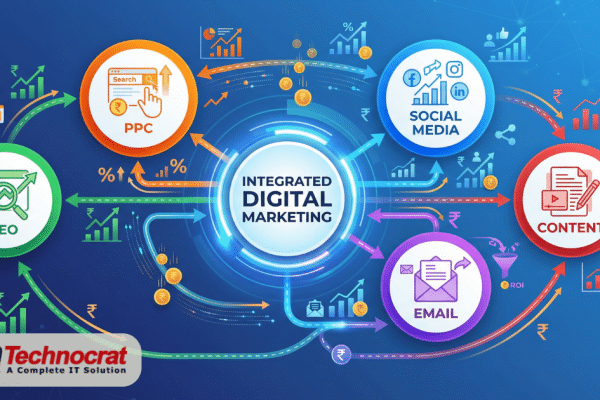

Omnichannel e-commerce businesses achieve 91% higher year-over-year customer retention rates and 287% higher lifetime value through AI automation. These numbers show why single-channel marketing fails in today’s competitive market.
The modern customer journey is complicated. A shopper discovers your product on Instagram. They research specifications on desktop. They compare prices on mobile. Further, they complete checkout through a voice assistant. This complexity demands intelligent coordination across all channels.
Traditional marketing treats each platform separately. Email campaigns run independent of social media. Website experiences disconnect from mobile apps. Customer service operates without purchase history context. This fragmentation drives customers to competitors.
AI-powered omnichannel marketing unifies every customer interaction. Automated systems synchronize inventory, personalize messaging, and optimize conversion paths across platforms. Machine learning analyzes behavior patterns to predict needs and deliver relevant content at the right moment through the preferred channel.
This guide provides a complete framework for implementing omnichannel ecommerce marketing 2026. You will learn proven AI ecommerce automation strategies that increase revenue, reduce costs, and improve customer satisfaction.
Atechnocrat has optimized 300+ global e-commerce businesses with AI-powered omnichannel strategies. Our digital marketing services combine technical expertise with practical implementation experience. Multi channel online marketing is essential for e-commerce success in 2026.
Evolution of E-commerce Customer Journey in 2026
The customer journey has transformed from linear paths to complex webs of interactions. Shoppers move fluidly between devices and platforms throughout their purchase process.
Multi-device behavior defines modern shopping habits. Customers start product research on mobile during commutes. They continue evaluation on desktop at work. They complete purchases on tablets at home. Marketing systems must recognize individual customers across all touchpoints and maintain consistent context.
Social commerce integration has become mainstream. Instagram Shopping, Facebook Marketplace, TikTok Shop, and Pinterest product pins enable direct purchases without leaving social platforms. AI ecommerce automation synchronizes product catalogs, inventory levels, and customer data across social commerce platforms.
Voice and visual search reshape product discovery. Customers take photos to find similar items or ask smart speakers about product features. Our SEO services include voice search optimization and visual search compatibility.
Mobile-first purchasing preferences dominate. Over 70% of online shopping happens on smartphones. Mobile experiences must load fast, display clearly, and enable quick checkouts. Poor mobile optimization drives immediate abandonment.
Real-time personalization has become standard. Customers expect relevant product recommendations, contextual content, and personalized offers based on browsing history and purchase patterns. Generic experiences feel outdated and impersonal.
AI-Powered Customer Segmentation for E-commerce
Customer segmentation forms the foundation of effective omnichannel ecommerce marketing 2026. AI-powered segmentation analyzes thousands of data points to create dynamic customer groups that update in real-time.
Behavioral segmentation with machine learning identifies patterns invisible to manual analysis. Algorithms detect micro-segments based on browsing habits, interaction frequency, content preferences, and engagement patterns. These segments enable precise targeting that improves conversion rates and reduces marketing waste.
Purchase history pattern analysis reveals product affinities, buying cycles, and category preferences. Machine learning models identify customers likely to purchase complementary products or upgrade to premium options. This intelligence powers automated cross-sell and upsell campaigns.
Predictive lifetime value calculation estimates future revenue potential for each customer. AI models consider purchase frequency, average order value, retention likelihood, and growth trajectory. High-value customers receive premium experiences while low-value segments get cost-effective automated engagement.
Cross-channel behavior tracking connects activities across platforms into unified customer profiles. A customer who browses on mobile, adds items on desktop, and purchases through an app is recognized as one person. This continuity enables consistent messaging and prevents redundant communications.
Intent prediction uses signals to identify purchase readiness. Browsing frequency increases, price comparison research, wishlist additions, and cart builds indicate high intent. Automated systems prioritize these customers with timely incentives that remove purchase barriers.
Automated Email Marketing and Personalization
Email marketing automation remains the highest ROI channel in omnichannel ecommerce marketing 2026. AI-powered email systems generate 450% higher click-through rates compared to generic broadcasts through intelligent personalization.
AI-driven email content generation creates unique messages for each recipient. Natural language processing analyzes successful email patterns and generates subject lines, body copy, and calls-to-action optimized for specific segments. This automation scales personalized communication without manual copywriting.
Dynamic product recommendation engines insert contextually relevant items into email templates. Algorithms analyze purchase history, browsing behavior, and similar customer patterns to suggest products with high conversion probability.
Abandoned cart recovery sequences have evolved beyond simple reminders. Multi-step campaigns combine product highlights, social proof, scarcity messaging, and progressive discounts. AI optimization determines optimal send times, message sequence, and incentive levels. Effective cart recovery campaigns convert 15-30% of abandoned sessions.
Post-purchase follow-up automation nurtures relationships beyond transactions. Order confirmations, shipping updates, delivery notifications, usage tips, review requests, and replenishment reminders maintain engagement throughout the product lifecycle.
A/B testing automation continuously improves email performance. AI systems test subject lines, send times, content variations, and design elements simultaneously across segments. Winning variants deploy automatically while new tests launch to find additional improvements.
Social Commerce Integration and Automation
Our social commerce integration is critical for multi channel online marketing success. Social platforms now generate 30% of total e-commerce revenue for brands with optimized social shopping experiences.
Instagram Shopping optimization transforms social content into shoppable experiences. Product tags link posts directly to purchase pages. AI analyzes which products perform best in Stories, Reels, and feed posts. Automated systems recommend optimal posting times and product selections.
Facebook Marketplace automation synchronizes product catalogs and manages listings across local markets. Dynamic pricing adjusts to local competition and demand. Automated responses handle common inquiries while routing complex questions to human support.
TikTok Shop integration capitalizes on viral discovery potential. Short-form video content drives impulse purchases when combined with seamless checkout experiences. AI identifies trending products and content formats for your target audience.
Pinterest shopping features convert visual discovery into sales. Rich pins display real-time pricing and availability. Automated catalog uploads keep product information current.
Social media advertising automation manages campaigns across platforms from unified dashboards. AI optimizes budgets, targeting, creative variations, and bidding strategies. This intelligence maximizes return on ad spend without constant manual oversight.
Cross-Channel Inventory and Order Management
Cross-channel inventory management prevents overselling and minimizes stockouts. Real-time synchronization across all sales channels is essential for omnichannel ecommerce marketing 2026 success.
Real-time inventory synchronization updates stock levels instantly across all platforms. When a product sells on your website, the quantity automatically adjusts on Amazon, eBay, social commerce channels, and physical stores. This prevents disappointing customers with out-of-stock items after purchase.
Multi-warehouse automation optimizes order routing to reduce shipping costs and delivery times. AI algorithms determine which warehouse should fulfill each order based on inventory location, shipping distance, carrier rates, and delivery speed requirements.
Marketplace inventory management handles the unique requirements of Amazon, eBay, Walmart, and other third-party platforms. Automated repricing adjusts to competitive dynamics. Compliance monitoring ensures listings meet platform requirements.
International shipping optimization calculates duties, taxes, and shipping costs automatically. Compliance checks ensure products can legally ship to destination countries. Landed cost calculators show customers total prices before checkout to prevent cart abandonment.
Return and refund automation streamlines reverse logistics. Self-service portals let customers initiate returns without contacting support. Our website design services include return portal development and integration.
AI-Powered Customer Service Automation
AI-powered customer service automation delivers 24/7 support across multiple channels while reducing operational costs by 40-60%. Intelligent automation handles routine inquiries instantly while routing complex issues to human agents with full context.
Chatbot development provides immediate responses on websites, mobile apps, and messaging platforms. Natural language processing understands customer questions and provides accurate answers. Conversational AI handles order status checks, product recommendations, return initiations, and basic troubleshooting.
Multi-language customer support expands market reach without proportional cost increases. AI translation enables real-time support in dozens of languages. This capability is essential for global e-commerce businesses targeting international markets.
Automated ticket routing ensures urgent issues reach appropriate specialists quickly. AI analyzes ticket content, customer value, and issue type to assign optimal routing. This intelligence reduces resolution times and prevents escalations.
Sentiment analysis monitors customer emotions throughout service interactions. Negative sentiment triggers supervisor alerts or immediate escalation to senior agents. This proactive intervention prevents small frustrations from becoming relationship-ending experiences.
Knowledge base automation maintains up-to-date self-service resources. AI identifies common questions from support tickets and generates help articles automatically. This continuous improvement reduces ticket volumes over time.
Performance Analytics and Attribution
Performance analytics and attribution provide the insights needed to optimize omnichannel ecommerce marketing 2026 strategies. Accurate measurement across channels enables data-driven decision making.
Cross-channel attribution modeling reveals how different touchpoints contribute to conversions. Data-driven attribution uses machine learning to assign credit based on actual conversion patterns. Understanding attribution guides budget allocation across channels.
Customer lifetime value tracking measures total revenue potential rather than single transaction value. CLV calculations consider purchase frequency, average order value, retention probability, and profit margins. High CLV customers justify premium acquisition and service costs.
Multi-touch conversion analysis maps complete customer journeys from awareness through purchase. Visualization shows common paths, typical journey lengths, and critical conversion moments. This intelligence identifies friction points and optimization opportunities.
Real-time performance dashboards display critical metrics accessible to marketing teams and executives. Alert systems notify stakeholders when metrics exceed thresholds. Mobile access enables monitoring from anywhere.
Predictive analytics anticipates future performance based on historical patterns and current trends. Revenue projections guide inventory planning. Demand forecasts optimize advertising budgets and promotional timing. Our digital marketing services include comprehensive analytics implementation.
Industry-Specific Smart Ecommerce Strategies
Different e-commerce industries require specialized approaches. Industry-specific automation addresses unique customer behaviors and purchase patterns.
Fashion retailers benefit from virtual try-on technology that reduces return rates. AI-powered style recommendation engines analyze preferences and suggest complete outfits. Social media styling automation creates outfit inspiration content from existing product catalogs.
Electronics e-commerce requires product comparison automation that helps customers evaluate specifications and compatibility. Cross-selling automation recommends compatible accessories like cases and cables. Technical content automation generates specification sheets and setup instructions.
Home and garden businesses use room visualization and augmented reality integration to show how items look in customer spaces. DIY project suggestion engines recommend products for common home improvement projects. Local delivery optimization enables same-day delivery for large items.
Health and beauty brands leverage personalized product recommendations based on skin type and concerns. Subscription box automation creates recurring shipments based on usage patterns. Ingredient tracking ensures customers avoid problematic formulations.
Conclusion
Omnichannel ecommerce marketing 2026 has evolved from competitive advantage to business necessity. Customers expect seamless experiences across all touchpoints regardless of channel or device.
AI ecommerce automation provides the foundation for scalable growth. Intelligent systems synchronize inventory, personalize messaging, optimize conversion paths, and analyze performance continuously without proportional staff increases.
Professional implementation is essential for complex multi channel online marketing integration. Technical expertise, strategic planning, and execution experience determine success or failure.
Get Free Omnichannel E-commerce Strategy Consultation
Atechnocrat helps global e-commerce businesses implement AI-powered omnichannel marketing. Our team has optimized 300+ online stores across industries and markets.
Our digital marketing services include comprehensive omnichannel strategy development, AI automation implementation, and ongoing optimization. We handle technology selection, platform integration, workflow development, team training, and performance management.
Schedule your free consultation today. We will assess your current channels, identify integration opportunities, estimate implementation costs, and outline expected returns. No obligation. No sales pressure.
The future of e-commerce belongs to businesses that embrace intelligent automation and unified customer experiences. Start your omnichannel transformation today.